
Chinese National Charged With Voter Fraud After Impersonating Legal Resident and Reporting Him to DHS
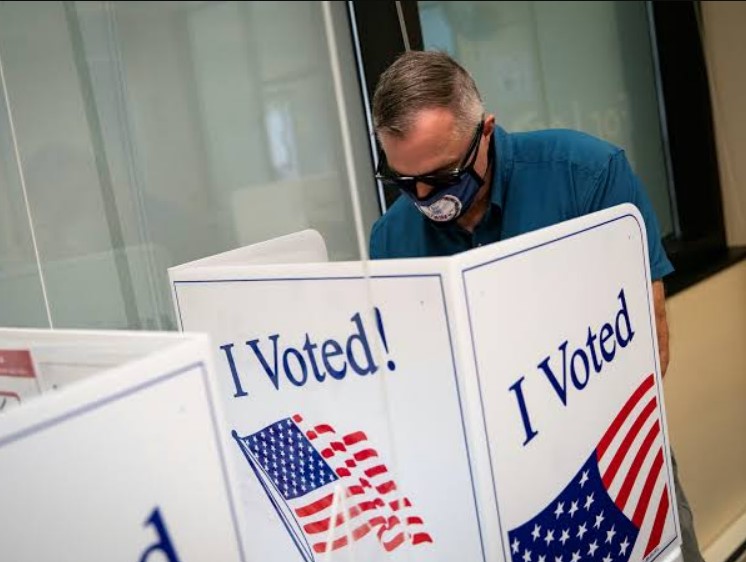
A Massachusetts man is facing federal voter fraud charges after prosecutors say he used another Chinese national’s identity to register and vote in the 2024 presidential election.
What makes the case unusual is what allegedly happened next.
Read next: Who is calling from (369) 216-6437? Debt reduction calls explained
According to the U.S. Department of Justice, Yupeng Sun, 33, allegedly used the same man’s identity in immigration paperwork and later submitted anonymous tips accusing that person of illegally voting. The alleged scheme also affected the man’s wife and led to the couple entering removal proceedings.
Sun was arrested on August 19, 2026, in Massachusetts. He has been charged with fraudulent voter registration and fraudulent voting. The allegations have not been proven in court, and Sun is presumed innocent unless proven guilty.
Read next: Rental scam alert how apartment hunters are being deceived
How the alleged voting scheme started
The case goes back to October 2024, just weeks before the presidential election.
According to court filings, Sun allegedly submitted an online voter registration through the Massachusetts Secretary of the Commonwealth’s website on October 10. Prosecutors say he did not use his own identity.
Read next: Is ShopVSB.com Legit? Vitamin Sea Boutique Review 2026
Instead, he allegedly impersonated another Chinese national living in Massachusetts who had lawful permanent resident status.
That detail matters because lawful permanent residents are not eligible to vote in federal elections.
The alleged identity use did not stop with registration.
On October 31, Sun allegedly went to Malden City Hall and submitted an early voting ballot for the 2024 presidential election using the other man's identity.
Federal prosecutors say that ballot was cast in the victim's name, not Sun's.
Then the alleged scheme took an unusual turn
After allegedly registering and voting under the other man's name, Sun reportedly contacted federal immigration agencies.
The DOJ says that in April and May 2026, Sun submitted several anonymous tips to Homeland Security Investigations and U.S. Citizenship and Immigration Services.
The tips allegedly accused the same man of illegally voting in the 2024 presidential election. They also allegedly pointed out that he was a permanent resident rather than a U.S. citizen.
That created a strange situation.
Prosecutors say Sun was allegedly the person who had used the victim's identity to register and vote, yet he was also reporting the victim to federal agencies as though the victim had committed the offense.
The allegations make that part of the case especially unusual.
The immigration allegations started even earlier
The voter fraud allegations were not the only accusations against Sun.
According to the DOJ, Sun also allegedly impersonated the same man and his wife in documents submitted to USCIS in April 2024.
The documents allegedly requested that the couple abandon their lawful permanent resident status.
The couple later returned to the United States from an international trip in June 2024.
At Logan International Airport in Boston, they were subjected to secondary inspection. Their green cards were confiscated, and they were placed into removal proceedings, according to federal prosecutors.
The government says those immigration problems resulted from the fraudulent forms allegedly submitted by Sun.
That means the alleged identity misuse was not limited to voting.
Why the identity theft mattered
Using another person's name to cast a ballot is serious on its own.
But using that identity in immigration documents can create a much bigger problem for the actual person.
A lawful permanent resident can face serious consequences if government records appear to show that the person committed immigration or election violations.
In this case, prosecutors allege that the victim and his wife actually faced removal proceedings because of fraudulent paperwork submitted in their names.
The case therefore involves two different kinds of alleged harm.
The first concerns the integrity of an election.
The second concerns the immigration status of people whose identities were allegedly used without permission.
What Sun is charged with
Sun faces two federal charges.
-
Fraudulent voter registration
-
Fraudulent voting
According to the DOJ, each charge carries a maximum penalty of five years in prison, up to three years of supervised release, and a fine of up to $250,000. The government also says Sun would be subject to deportation after completing any sentence imposed.
Those are maximum penalties, not a prediction of what sentence Sun would receive if convicted.
Federal judges determine sentences under federal law and the U.S. Sentencing Guidelines.
The charging documents contain allegations, not findings of guilt.
How investigators pieced the case together
The investigation had several separate pieces to connect.
Investigators had to look at the alleged voter registration, the ballot, the immigration documents, and the anonymous reports sent to federal agencies.
The DOJ says HSI New England led the investigation, with assistance from the Lexington Police Department and the Andover Police Department.
That combination of records appears to be important because the alleged conduct involved different government systems.
A voter registration creates one set of records.
An early ballot creates another.
Immigration forms create another.
And reports to federal agencies create yet another trail.
When those records point toward the same identity, investigators can compare the information and determine who allegedly submitted each document.
Why the case is getting attention
The unusual part is not simply the accusation that a noncitizen voted.
The alleged use of another person's identity is what sets this case apart.
Prosecutors say Sun allegedly did not simply register under his own name. He allegedly used the identity of another person who had lawful permanent resident status.
Then, according to the government, he allegedly reported that same person for the very voting violation that prosecutors say Sun committed using the person's identity.
That creates a much more complicated identity fraud allegation than a person simply checking the wrong box on a voter registration form.
What federal law says about noncitizen voting
Federal law prohibits noncitizens from voting in federal elections.
Lawful permanent residents, people holding temporary visas, and undocumented immigrants generally cannot vote in federal elections.
There are limited situations involving certain local elections where state or local law may differ, but that does not change the federal rule for federal elections.
That distinction matters because the case against Sun concerns the 2024 presidential election.
The DOJ specifically alleges that the ballot was submitted for the 2024 U.S. presidential election.
This case does not prove widespread voter fraud
One case should not be treated as proof that a broad election system is fraudulent.
It shows that federal authorities are investigating and prosecuting specific allegations when they find evidence of election-related misconduct.
The Massachusetts U.S. Attorney's Office has also created a Benefit & Voter Fraud Team in 2026 as part of its broader fraud enforcement work.
Other federal cases involving alleged illegal voting have also been brought this year.
For example, federal prosecutors in Massachusetts announced in May that a Canadian citizen and lawful permanent resident, Sunny Manhertz, was charged with allegedly voting in federal elections since 2008. That is a separate case and should not be confused with Sun's case.
The existence of multiple prosecutions does not establish how common noncitizen voting is nationwide.
Each case has to be judged on its own evidence.
What makes identity theft so dangerous
The Sun case also shows why identity theft can go far beyond stolen money.
People usually think of identity theft as someone opening a credit card or taking money from a bank account.
But an identity can be used to create government records, submit applications, sign forms, or make accusations against the real person.
That can create problems that are difficult to spot.
Someone may not know that a document was filed in their name until a government agency contacts them.
By then, the false record may already be affecting their case.
What to do if government records contain false information
If you receive a voter registration notice for an election you did not register for, do not ignore it.
Contact your local election office using contact information from its official government website.
If you receive an immigration notice involving an application or form you never submitted, keep the notice and speak with a qualified immigration attorney.
Do not assume the problem will disappear on its own.
Government records can be corrected, but you need to know what was filed and where it came from.
Keep copies of everything you receive.
That paper trail can become important if someone has used your identity.
The case is still pending
Sun has been charged, but he has not been convicted.
The DOJ explicitly states that the details in the charging documents are allegations and that the defendant is presumed innocent unless proven guilty beyond a reasonable doubt.
That distinction matters.
The government's allegations describe a coordinated scheme involving voter registration, a presidential ballot, immigration documents, and reports to federal agencies.
The federal court will ultimately determine whether those allegations are proven.
For now, the case remains an active federal prosecution in Massachusetts.
The bigger lesson from the case
The alleged scheme is unusual because it appears to combine election fraud with identity misuse and immigration fraud.
According to prosecutors, Sun allegedly used another person's identity to register and vote, allegedly submitted immigration paperwork in that person's name, and later allegedly reported that same person to federal agencies.
If those allegations are proven, the case would show how a stolen identity can be used across several government systems.
It also shows why unexpected government notices should never be ignored.
If a voter registration, ballot record, immigration form, or government complaint appears in your name and you did not submit it, check it quickly.
A false record can become a much bigger problem if nobody challenges it.
Updated August 21, 2026. This article is based primarily on the August 19, 2026 charging announcement from the U.S. Attorney's Office for the District of Massachusetts. The allegations remain unproven in court.
Meta description: A Massachusetts man is accused of using another man's identity to vote in 2024, then reporting him to immigration officials in an unusual federal case.
What Do You Think?
No one has commented yet. If this happened to you as well, say so below. Knowing that other people had the same call makes it far easier for the next person to trust their instincts.
Add Your Comment
Every comment is read by a person before it appears, so it will not show up straight away. Never post your phone number, address, or bank details here.