
Social Security Scam Calls, Emails and Texts Seniors Are Getting Now
 ·
Published
·
Updated
·
19 min read
·
Published
·
Updated
·
19 min read
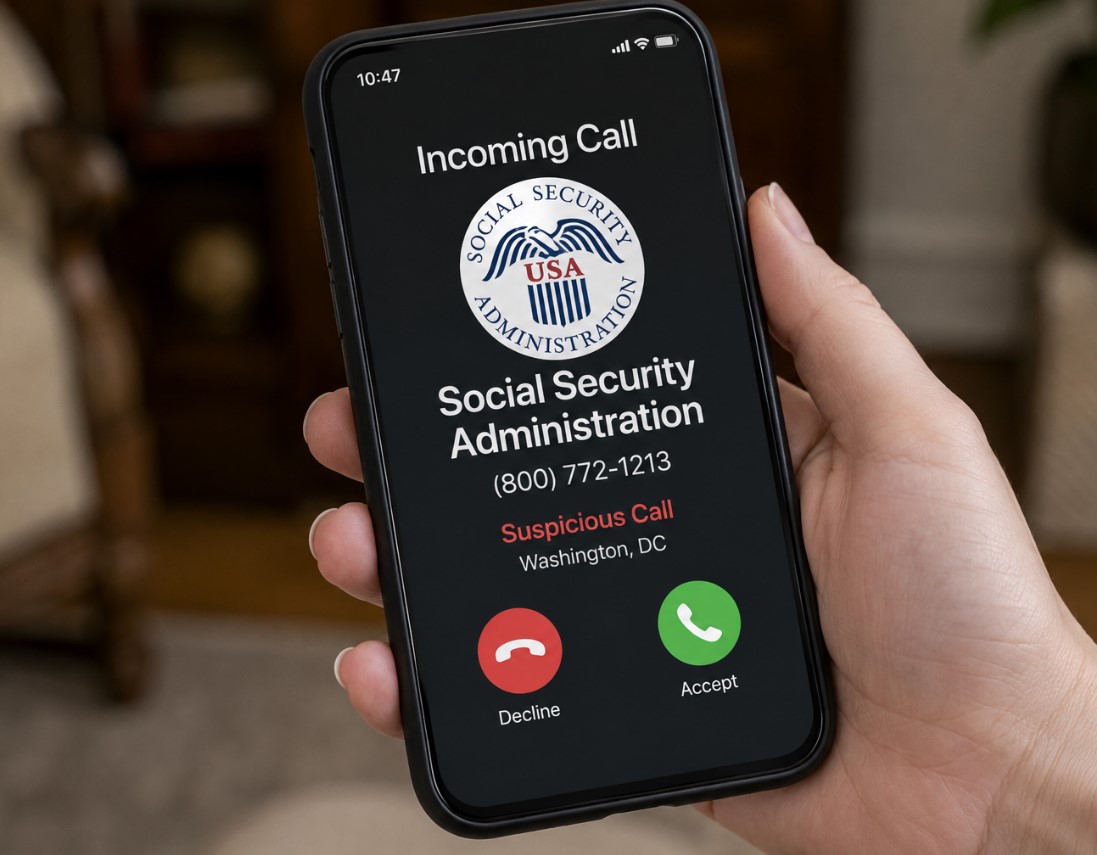
Somewhere in America right now, an older person is picking up the phone. The voice on the other end sounds calm, official and a little concerned. There is a problem with your Social Security number, the caller says. It may have been suspended. It may have been used in a crime. Your benefits may stop. Within minutes fear takes over.
This is the most reported government impersonation scam in the country, and in 2026 it has taken on new versions that get past the old advice. Fake statement emails, threatening texts, cloned voices and polite verification calls all now sit alongside the classic suspended number call.
I am Nitesh Kumar Gupta, founder and editor of The Scam Exposed. This guide covers what is actually happening this year, the exact words scammers use, how families can help without frightening anyone, and the one rule that defeats every version of the scam.
Key takeaways
- Adults 60 and over reported losing 2.4 billion dollars to fraud in 2024, up from about 600 million dollars in 2020, according to the Federal Trade Commission's report on protecting older consumers.
- The FTC logged more than 330,000 government impersonation complaints in 2025, up 25 percent year over year.
- Social Security cannot suspend your Social Security number. Any caller who says it can is a scammer.
- Social Security will never demand payment by gift card, wire, crypto, payment app or gold.
- Hang up and call back on a number you already have, such as 1-800-772-1213. That one rule beats every version.
Got a call claiming to be from Social Security? Check the number, website or email free on The Scam Exposed lookup. It takes about ten seconds and shows what other people were told.
How big this problem actually is
The numbers are worth reading slowly, because they explain why this scam keeps coming back.
Adults aged 60 and over reported losing 2.4 billion dollars to fraud in 2024, up from about 600 million dollars in 2020, according to the Federal Trade Commission's annual report to Congress. Because most fraud is never reported, the FTC estimates the real cost to older adults in 2024 was somewhere between 10.1 billion and 81.5 billion dollars.
The FTC received more than 330,000 government impersonation complaints in 2025, a 25 percent rise on the year before, as confirmed by the Social Security Administration in March 2026. Social Security remains one of the most frequently impersonated agencies in the United States.
| Measure | Figure | Source |
|---|---|---|
| Reported fraud losses, adults 60+, 2020 | About 600 million dollars | Federal Trade Commission |
| Reported fraud losses, adults 60+, 2024 | 2.4 billion dollars | Federal Trade Commission |
| Estimated true cost to older adults, 2024 | 10.1 to 81.5 billion dollars | Federal Trade Commission |
| Government impersonation complaints, 2025 | More than 330,000 | Social Security Administration |
| Year over year change | Up 25 percent | Social Security Administration |
Each of those numbers is a person. Often somebody's parent or grandparent, who trusted a stranger's voice and paid for it.
Why scammers target older adults specifically
It needs saying clearly: older adults are not targeted because they are less capable. They are targeted for practical reasons.
Money that took decades to build
Steady retirement income, savings and home equity make a single successful call far more profitable than one aimed at a 25 year old.
Respect for official communication
When a caller says they are from a federal agency, that carries real weight for someone who grew up when it usually meant something.
Time alone
Many older adults live by themselves. A caller with a warm or urgent voice may be the only person they speak to that day, and some scammers build a fake relationship over weeks before they ever mention money.
Fear for the monthly check
Nobody wants to hear that the payment covering rent, medicine and groceries is at risk. Fear clouds judgment, and clouded judgment is the entire business model.
The six Social Security scams running in 2026
1. The suspended number call
A caller, often with a recorded or scripted tone, says your Social Security number has been suspended because of suspicious activity or a criminal investigation. Arrest is coming unless you act now. Here is the fact that ends this call: the Social Security Administration cannot suspend a Social Security number. It does not exist as a process. Anyone who says otherwise is running a scam, without exception.
2. The fake statement email, new in February 2026
On 20 February 2026, the SSA Office of the Inspector General warned about a surge in emails claiming a Social Security statement is ready to download. These emails copy real logos, formatting and language. The link either opens a fake login page built to capture Social Security numbers and bank details, or installs remote access software that lets criminals control your computer and watch what you do. For background on how remote access trojans work, read our report Is DarkComet Still a Threat in 2026? If an email arrives unexpectedly asking you to click through to your benefits, do not click. Type ssa.gov into your browser yourself.
3. Threatening voicemails and texts
Messages claim a bank account tied to Social Security has been flagged, or that a payment failed and must be fixed today. Every one includes a callback number, and that number rings the scammer, not a government office.
4. Gift cards, wire transfers, crypto and gold
Memorize this one. No federal agency will ever ask you to pay a fine or protect your money using gift cards, wire transfers, cryptocurrency, payment apps or gold bars. SSA OIG lists all of these as things it will never ask for. Yet this remains the most effective step in the script, because by the time payment is mentioned the victim just wants the problem gone. Some scammers now even send couriers to collect cash or gold in person, a version we explain in our guide to fake callers who send couriers to your door.
5. The cloned grandchild
Using a few seconds of audio from social media, scammers now clone a real grandchild's voice with AI. The call comes in a panic: an accident, an arrest, money needed immediately, and please do not tell the rest of the family. We cover this in our guide to the AI voice grandparent scam, including the family code word that stops it.
6. The polite verification call
The quietest version. Someone claiming to be an SSA employee asks, pleasantly, to confirm your Social Security number, date of birth or bank details for verification. No threats, no urgency, which is exactly why it works. Real SSA staff do not cold call asking for this.
The four P's, straight from SSA
SSA describes almost every scam using four words. They work on any scam, not only this one.
- Pretend. The caller claims to be someone trustworthy, usually a government official.
- Problem or prize. There is trouble you supposedly caused, or a reward you supposedly won.
- Pressure. You must act immediately. No time to think, no time to call family.
- Payment. Money is demanded in a form that cannot be traced or reversed.
If a call, text or email hits even two of these, stop and check before doing anything else.
What the scam sounds like: common lines to recognize
Scammers work from scripts. The exact words change, but the same lines come up again and again. If you hear any of these, you are almost certainly talking to a scammer:
- This is a final notice from the Social Security Administration. Press 1 to speak to an officer.
- Your Social Security number has been suspended due to suspicious activity.
- A warrant has been issued in your name. To avoid arrest, you must resolve this today.
- Your benefits will be stopped unless you confirm your number and bank details.
- Do not hang up or speak to anyone else, or the case will be escalated.
- We need to move your money into a protected account while we investigate.
- You can pay the fine with gift cards from any store near you.
Notice how each line pushes one of the four P's. Many of these calls start as robocalls with a recorded message. Pressing a key connects you to a live scammer and also tells the system your number is active, which leads to more calls. The safest response to a recorded government warning is to hang up without pressing anything.
How Social Security really contacts you
Knowing what normal looks like makes the fake version easier to spot. Social Security mainly communicates by letters sent through the mail, and through messages inside your my Social Security account at ssa.gov. If you applied for benefits, asked for an appointment, or have an open question with your local office, an SSA employee may call you about that specific matter.
Even then, a real SSA employee will not threaten you, will not say your number is suspended, will not ask you to keep the call secret, and will never ask for payment by gift card, wire, crypto, cash or gold. If you are unsure whether a call was real, you can always end it politely and call 1-800-772-1213 or your local office using the number on ssa.gov. A real employee will understand. This simple check costs a few minutes and can save a lifetime of savings.
A typical case
The following is a typical case that shows the common pattern. It is not a specific real person.
A 74 year old widow gets a call on a Tuesday morning. Her caller ID shows a Washington DC number. A man introduces himself as an agent from the Social Security Office of the Inspector General and gives a badge number. He says her Social Security number was found on a rental car abandoned near the border with drugs inside, and that her number is about to be suspended. He reads out the last four digits of her number and her street address, which makes it all feel real.
He says she is not in trouble yet, but her bank accounts will be frozen as evidence unless she moves her money into a safe government account today. He tells her not to tell anyone, including her bank, because bank staff may be involved. He stays on the phone for three hours while she withdraws cash and buys gift cards at two stores, reading the card numbers to him one by one.
That evening her daughter calls, hears the story, and realizes what happened. By then the gift card balances have already been drained. Every step in this case matches the four P's: pretend, problem, pressure and payment.
Want to check the number that called you? Check the number, website or email free on The Scam Exposed lookup. It takes about ten seconds and shows what other people were told.
Red flags
- They say your Social Security number is suspended. That is not something SSA can do.
- They threaten arrest, legal action or stopped benefits. SSA does not threaten people by phone.
- They ask for gift cards, wire transfers, crypto, payment apps, cash or gold. No federal agency accepts these.
- They tell you to keep it secret, even from family or your bank.
- They want you to stay on the line while you go to the bank or a store.
- They send a photo of a badge or ID. Real officials do not prove themselves by text.
- The caller ID shows a government number. Caller ID can be faked to show anything.
- An email or text has a link to your statement or benefits. Go to ssa.gov yourself instead.
The key rule: Social Security will never call, text or email to demand payment or personal information. Hang up and call SSA back on 1-800-772-1213 or a number from your own paperwork.
Real SSA contact vs scam
| Feature | Real SSA | Scam |
|---|---|---|
| How they contact you | Usually by mail; calls are normally about something you already started | Unexpected call, text or email |
| Your SSN status | Cannot be suspended | Suspended or linked to a crime |
| Threats | None | Arrest, frozen accounts, stopped benefits |
| Payment method | Never gift cards, wire, crypto, cash or gold | Exactly those |
| Secrecy | Never asks you to hide it | Do not tell your family or bank |
| Calling back | Happy for you to call 1-800-772-1213 | Tries hard to keep you on the line |
The one rule that beats all six
Every scam in this guide collapses against a single habit: hang up and call back on a number you already have. Not the number they gave you. Not the number in the email. Not the number on your screen, because caller ID can be set to show anything, including the real SSA number.
Use the number on your own paperwork, on your card, or the official SSA line at 1-800-772-1213. A real caller will not mind you doing this. A scammer will try very hard to keep you on the line, and that resistance is your answer.
For related government impostor tricks, see our guides to fake SSA audit calls and transfer offers and fake FTC calls that end in a video police interview.
How families can help without frightening anyone
Protecting a parent does not mean turning them into someone who trusts nobody. A few habits do most of the work.
- Make it easy to ask. Many people feel embarrassed about nearly falling for a scam, and that embarrassment keeps them quiet until it is too late. Say plainly that no call is too small to check.
- Agree a family code word. With voice cloning, it is one of the most effective defenses available. A fake emergency call cannot answer it.
- Practice hanging up. Hanging up feels rude to many people. Saying out loud that it is allowed and expected removes that hesitation.
- Set up a my Social Security account together. Checking it now and then spots unusual activity early and keeps them in control.
- Put the real SSA number on the fridge. 1-800-772-1213, next to the number of a trusted family member.
For a wider view of the scams costing older adults the most, read the 5 costliest scams hitting older adults.
How to protect yourself
- Never confirm your Social Security number to anyone who calls you.
- Let unknown calls go to voicemail. Real callers leave messages you can check.
- Turn on your carrier's free spam call filter and your phone's silence unknown callers setting.
- Create your my Social Security account at ssa.gov before a scammer tries to.
- Never click links in emails or texts about your benefits. Type ssa.gov yourself.
- Freeze your credit with Equifax, Experian and TransUnion. It is free and blocks new accounts in your name.
- Talk about it. Tell friends and family about these calls. Scams thrive on silence.
What to do in the minutes after a suspicious call
Even if you hung up in time, a scam call can leave you shaken. Take a breath, then do three quick things. First, write down the number that called, the time, and what the caller said, while it is fresh. Second, look the number up and leave a note for others, so the next person is warned. Third, report the call at ReportFraud.ftc.gov and to SSA OIG. It takes a few minutes, and reports like yours are how investigators find and shut down these operations. If you shared anything at all, even just your date of birth, follow the steps below.
What to do if it already happened
If a call or message comes in, do not engage. Do not press numbers, click links or call back. Hang up or delete it. If money or information has already gone, move quickly:
- Call your bank or card issuer right now using the number on the back of your card. Ask them to block the card, stop or reverse any pending payment, and flag the account for fraud. Speed matters more than anything else.
- Report it to the SSA Office of the Inspector General at oig.ssa.gov/report.
- If you paid with gift cards, call the gift card company right away using the number on the back of the card and ask them to freeze the balance.
- Report it to the FTC at ReportFraud.ftc.gov. Your report goes into the Consumer Sentinel database used by law enforcement across the country.
- Report it to the FBI at IC3.gov, especially if money was taken. Include dates, amounts, phone numbers, links and screenshots.
- If personal details were exposed, create a recovery plan at IdentityTheft.gov and consider a free credit freeze with Equifax, Experian and TransUnion.
- If you are 60 or older, or helping someone who is, call the National Elder Fraud Hotline free at 1-833-372-8311. A case manager can walk you through every report.
- Keep a written log of every call, text, website and payment. Banks and investigators move faster when the facts are in one place.
Watch out for the recovery scam. After you report a loss, you may get calls or messages from someone who says they can get your money back for a fee. They may claim to be a lawyer, a government agency, a crypto tracing firm or even the FTC. This is a second scam aimed at people who were already hurt. Real agencies never charge a fee to recover money. Check our guide on Why Past Scam Victims Are Being Targeted Again to recognize these fake recovery agents.
Reporting does not guarantee the money comes back, but it helps investigators see patterns, and in some wire cases a fast report stops the transfer in time. Our page on the first 48 hours after a scam covers this in more detail. And please do not let shame stop you speaking up. These are professional manipulators running tested scripts. Falling for one says nothing about your intelligence.
Quick quiz: scam or not?
A caller says your Social Security number has been suspended because of a crime in Texas. Scam or not?
Scam. Social Security numbers cannot be suspended. Hang up.
You receive a letter in the mail from SSA about a change to your benefit amount, and you check it by logging in at ssa.gov yourself. Scam or not?
Not a scam. SSA mainly contacts people by mail, and you verified it through the official site.
A friendly caller from Social Security just wants to verify your bank account so your payment is not delayed. Scam or not?
Scam. This is the polite verification call. Real SSA staff do not cold call to collect your bank details.
Got a call or text about this? Check the number free. Check the number, website or email free on The Scam Exposed lookup. It takes about ten seconds and shows what other people were told.
Frequently asked questions
Will Social Security ever call me about a problem with my number?
SSA does not call, text or email demanding payment or personal information. Any call saying your number is suspended or tied to a crime is a scam.
What if the caller already knows some of my real information?
Scammers often buy leaked personal data beforehand. Knowing a few real details does not make a caller legitimate.
Can Social Security really call me at all?
SSA may call in some cases, usually about a claim or matter you already started. They will not threaten you or demand payment. When in doubt, hang up and call 1-800-772-1213.
The caller ID showed a real government number. Is it real?
Not necessarily. Caller ID can be spoofed to show any number. Always call back on a number you find yourself.
I already gave out my Social Security number. What now?
Report it to SSA OIG and the FTC, file at IdentityTheft.gov, and freeze your credit with all three bureaus.
Can I get money back that I paid with gift cards?
Sometimes, if you act fast. Call the gift card company immediately using the number on the card, and report the scam to the FTC.
Is there free help for older adults who were scammed?
Yes. The National Elder Fraud Hotline at 1-833-372-8311 offers free help to people 60 and older and their families.
Help us warn others
Got this call or message? Search the number on The Scam Exposed and leave a comment on its page to warn others. Every comment helps the next person who looks that number up before calling back.
Share this with a parent or grandparent. A two minute read today can save a family thousands of dollars tomorrow. Scammers count on people not talking about this, so talking about it is one of the best defenses we have.
How we researched this article
This guide uses data from the Federal Trade Commission's reports on fraud against older adults, figures confirmed by the Social Security Administration, warnings from the SSA Office of the Inspector General, and the FTC's fraud reporting site at ReportFraud.ftc.gov. The typical case is a composite of the common pattern, not a specific person. We update this guide when new warnings appear.
This article is for general information and awareness only and is not legal or financial advice. For questions about your own benefits, contact Social Security directly at 1-800-772-1213 or ssa.gov.
Read next on this topic
 The Medicare Calls Hitting Seniors This Fall, and How to Shut Them DownRead guide →
 Calls Offering a Lower Credit Card Rate Want Your Money FirstRead guide →
 The 5 Scams Costing Older Adults the Most, According to the FBIRead guide →
 Fake Celebrity Videos Pushed $632 Million in Investment LossesRead guide →
 The NYPD Gold Bar Scam Took $100 Million From New YorkersRead guide →
 A Fake Grandchild Call Can Use an AI Copy of Their VoiceRead guide →
Share Your Experience
No one has commented yet. If this happened to you as well, say so below. Knowing that other people had the same call makes it far easier for the next person to trust their instincts.
Add Your Comment
Every comment is read by a person before it appears, so it will not show up straight away. Never post your phone number, address, or bank details here.