
A Fake Grandchild Call Can Use an AI Copy of Their Voice
 ·
Published
·
Updated
·
17 min read
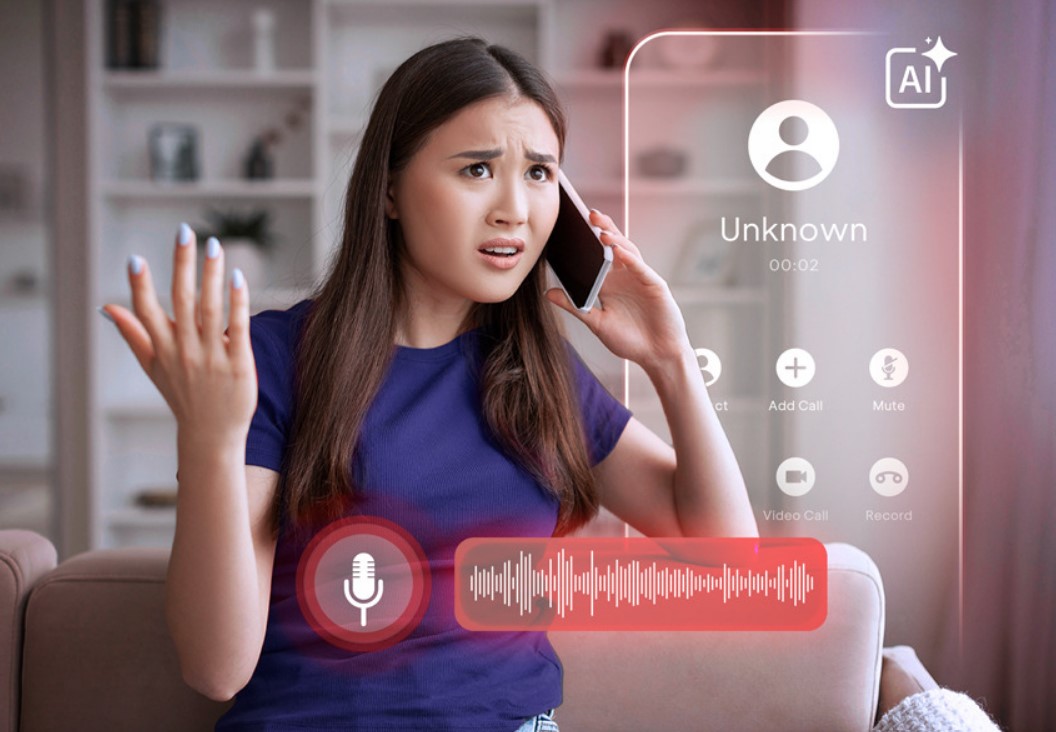
"Grandma, it's me. Please don't tell Mom and Dad. I'm in trouble and I need your help." The voice is crying, scared and unmistakably your grandchild's. Except it is not. In 2026, a scammer can copy almost anyone's voice from a few seconds of audio and use it to call their grandparents, parents or spouse in real time. This is the AI voice clone scam, and it is one of the most frightening frauds aimed at older Americans today.
Cloning a human voice used to require hours of clean studio recordings. Now it takes roughly three seconds, about the length of a voicemail greeting. Researchers pointed to Microsoft's VALL-E model, which could produce a usable clone from a three second sample. OpenAI limited public access to its own Voice Engine in 2024, citing the risk of misuse. Commercial and open source tools followed anyway.
At The Scam Exposed we hear from readers every week who got one of these calls. Some hung up in time. Some lost thousands. This guide explains how voice cloning works, the exact script scammers use, why it fools careful people, and the simple family habits that beat it, no technology required.
Key takeaways
- A usable voice clone can now be made from about three seconds of audio, roughly the length of a voicemail greeting.
- The FTC ran a Voice Cloning Challenge and concluded there is no single technology fix, so the defense has to be a family habit, not software.
- "Don't tell your parents" is the isolation tactic at work. Real emergencies involve more family, not fewer.
- A family code word beats trying to recognize a voice. A clone can copy the sound but cannot know a word it has never heard.
- If your bank uses voice ID, ask to add a second check so your voice alone cannot authorize a transfer.
What is an AI voice clone scam?
An AI voice clone scam is a phone call or voice message in which a criminal uses artificial intelligence to sound like someone you know, usually a grandchild, child, spouse or friend. The fake voice describes an emergency and asks for money fast, often in cash, gift cards, wire transfers or crypto.
The best known version is the grandparent scam, which has existed for decades. In the old version, a scammer simply claimed to be "your favorite grandson" and relied on a bad phone line and panic. In the AI version, the voice actually sounds right. It has the same tone, the same accent and sometimes the same way of saying "Grandma." That removes the one check most people relied on: "I would know my own grandchild's voice."
Voice clones are also used to impersonate bosses asking employees to wire money, family members in fake "kidnapping" calls, and people trying to get past bank voice verification systems.
How big is the problem?
Voice clone calls are hard to count, because most victims report a "family emergency scam" or "grandparent scam" and may never know AI was involved. But the warning signs from federal agencies are clear.
| Source | What it found |
|---|---|
| FTC Voice Cloning Challenge, 2024 | Awarded four winning ideas, including liveness scoring and audio watermarking, but concluded there is no single solution to voice cloning harm |
| FTC consumer alert, April 2024 | Warned that scammers use cloned voices of family members to ask for urgent money |
| Research on VALL-E | A usable voice clone could be produced from about a three second sample |
| OpenAI, 2024 | Limited public access to its Voice Engine, which needed about fifteen seconds of audio, citing misuse risk |
You can read the FTC's findings on its Voice Cloning Challenge winners and its consumer alert on harmful voice cloning. The agency's own conclusion is worth reading twice: the competition did not solve the problem. That means the protection has to come from you and your family.
How three seconds of audio becomes a scam call
Voice cloning software learns the shape of a person's voice: pitch, rhythm, accent and the small habits in how they speak. Feed it a short clip, and it can generate new sentences the person never said.
Two changes since 2024 matter most for ordinary families.
Real time conversion
Early clones had to be typed out and played back, so the caller could not react naturally to your questions. Newer tools convert speech live. The scammer speaks into a microphone and comes out sounding like your grandchild, answering your questions in real time.
Detection has not kept up
There is currently no reliable consumer app that can tell you, during a live call, whether a voice is synthetic. Bad audio quality, crying and background noise, all common in "emergency" calls, also hide the small glitches that might give a clone away.
Where scammers get your voice
Almost nobody thinks of their voice as something they are publishing. It usually is.
- Voicemail greetings. Anyone who calls and lets it ring gets a clean recording of you saying your own name.
- Social media videos. Birthday clips, graduation videos, church events and family reels. Public settings mean anyone can download them.
- Live streams and recorded meetings. Community groups, school events and webinars are often posted online afterward.
- Silent calls. Some people report calls where nobody speaks. Saying "Hello? Who is this?" several times gives the caller a sample.
- Breached recordings. Customer service call recordings have appeared in data leaks.
Three seconds is roughly "Hi, you have reached David, leave a message." Grandchildren, who post more video than anyone, are often the voices used against their grandparents.
The AI grandparent scam, step by step
Step 1: The panic opening
The call often comes late at night or early in the morning, when you are tired. You hear crying or a shaky voice: "Grandpa, it's me. I'm okay, but I'm in trouble." Many victims fill in the name themselves: "Jake, is that you?" Now the scammer knows who to be.
Step 2: The emergency
The story is designed to be urgent and embarrassing. A car accident. An arrest. A lost passport abroad. A hospital bill. Sometimes the grandchild says they hit a pregnant woman or were caught with drugs in someone else's car.
Step 3: The secret
"Please don't tell Mom and Dad. They'll be so mad." This is the most important line in the scam. It isolates you from the people who could tell you in one call that your grandchild is safe at home.
Step 4: The authority figure
A second person takes the phone: a "lawyer," "public defender," "police officer" or "bail bondsman." They sound calm and official. They explain the bail amount or legal fee and say the case is confidential.
Step 5: The payment
They ask for cash, gift cards, a wire transfer, crypto at a Bitcoin ATM, or a payment app. Increasingly, they send a "courier" to your home to collect cash in an envelope, or ask you to mail cash hidden in a book or magazine.
Step 6: The second request
If you pay once, they call back. The other driver's injuries were worse, the judge raised bail, or there is a new fee. The demands keep growing until someone in the family finds out.
A typical call, start to finish
This example is based on the patterns described by the FTC and the reports our readers send us. The details are typical rather than taken from one single victim.
At 6:40 a.m., a grandmother in Ohio gets a call. Her grandson's voice says he was in a car accident in another state and is being held by police. He is crying and says his nose is broken, which explains why he sounds a little different. He begs her not to tell his mother.
A man who says he is a public defender comes on the line. He says bail is $9,500, but because the grandson has no record, the judge will accept cash today. A courier will come to her house so the money can be processed quickly. He tells her the case is under a gag order, so she must not discuss it with anyone, including bank staff.
She goes to the bank. The teller asks why she needs so much cash. She says it is for a home repair, just as she was told. Two hours later a young man in a car picks up the envelope. That afternoon, the "lawyer" calls again: the other driver has died, and bail is now $25,000. Only then does she call her daughter, and learns her grandson has been at college all day.
Why it works on smart, careful people
Love overrides caution. When someone you love sounds terrified, your brain shifts into rescue mode. Checking details feels like betrayal.
The voice sounds right. For your whole life, recognizing a voice meant knowing who was calling. That rule no longer holds.
Secrecy blocks the obvious check. One call to a parent would end the scam, which is why the scammer forbids it.
Authority adds pressure. A calm "lawyer" or "officer" makes the story feel official and the deadline feel real.
Time pressure removes thinking time. "The judge leaves at noon" or "the courier is on the way" stops you from sleeping on it.
If this has happened to you, it is not a sign of weakness. It means criminals used the best part of you, your love for your family, against you.
Red flags on the call
- An urgent family emergency that needs money right now. Real emergencies rarely require cash within the hour.
- "Don't tell Mom and Dad" or "keep this secret." This is the clearest sign of all.
- The caller avoids questions or gets upset when you ask something personal.
- A reason the voice sounds a little off, such as a broken nose, a cold or a bad line.
- A lawyer, officer or bail bondsman you have never heard of takes over the call.
- Payment by cash, gift cards, crypto, wire or courier. Courts and lawyers do not collect bail this way.
- You are told to lie to the bank teller about why you are withdrawing money.
- A gag order or "confidential case" that forbids you from talking to anyone.
The one rule to remember: hang up and call your loved one back on the number you already have. If they do not answer, call another relative. A real emergency survives a five minute check. A scam does not.
Real emergency vs voice clone scam
| Real emergency | Voice clone scam |
|---|---|
| Other family members usually already know | You are told not to tell anyone |
| You can call your loved one back on their own number | The caller says their phone is broken or taken |
| Bail is paid at a courthouse or through an official system | Bail is collected by courier, gift card or crypto |
| Lawyers give names and firms you can look up | The "lawyer" refuses to give details you can verify |
| You have time to make calls and check | Constant pressure to act in minutes |
| Your loved one can answer the family code word | The caller changes the subject or gets upset |
Other voice clone scams to know about
The grandparent call is the most common, but the same technology powers several other scams. Knowing them helps you recognize the pattern even when the story changes.
The fake kidnapping call
You hear your child or grandchild screaming for help, then a stranger takes the phone and says they have been kidnapped. You are told to stay on the line, not call police, and send money immediately by wire, payment app or crypto. These calls are designed to keep you on the phone so you cannot check. If you can, use another phone, a text or a family member to contact the person directly while the call continues. In almost every reported case, the "victim" was safe and had no idea.
The boss or coworker call
Employees, especially in small businesses, churches and nonprofits, get a call or voice message that sounds like their manager asking them to buy gift cards for clients or wire money to a new vendor today. Always confirm money requests through a second channel, such as a known phone number or in person.
The romance or friend voice note
Romance scammers who have only ever messaged in writing now send voice notes to seem more real. The voice may be cloned from someone else's videos entirely. If you have never met in person or on a live video call, a voice note proves nothing. Our guide to early warning signs of a romance scam covers this pattern.
The fake bank or government call
Some scammers pair a cloned voice of a real bank employee or official with caller ID spoofing so the call looks and sounds legitimate. The defense is the same as always: hang up and call the number on your card or the agency's official website. Our article on fake bank callers who send couriers to your door shows how far these schemes now go.
Across every version, the common thread is not the technology. It is urgency, secrecy and an unusual payment method. Those three signs matter more than how real the voice sounds.
The family code word, and how to set one up
This is the single most effective protection against voice clone scams, and it costs nothing.
- Pick a word or short phrase that is not findable online. Not a pet's name, birthday, street or school. Something random, like "blue pancake" or "Uncle Walter's canoe."
- Share it in person or on a call you started, never by text or social media.
- Include everyone who might call in an emergency: grandchildren, children, spouses and close friends.
- Agree on the rule: anyone asking for money in an emergency must say the word. No word, no money, no exceptions.
- Practice once. Make it normal, even a little fun, so nobody feels awkward asking for it under pressure.
If you do not have a code word yet, ask a question only the real person would know and that cannot be found on social media, such as what you cooked at the last family dinner.
Is your bank using your voice as a password?
Many banks and phone systems use voiceprint authentication. You say a phrase and the system matches it against a stored profile. It was adopted because voices were considered hard to fake. That assumption is now under pressure, and security researchers have warned that generative audio can be used against voice password systems.
If your bank offers voice ID:
- Ask whether you can opt out and use a passcode or app approval instead.
- If you keep it, ask that your voice alone cannot authorize transfers, only account access.
- Turn on transaction alerts so any money movement reaches you by text or app immediately.
This is not a reason to panic about your bank. It is a reason to put a second lock on the door.
How to shrink your voice footprint
You cannot remove your voice from the internet, but you can make it harder to collect.
- Use the default voicemail greeting, the robotic one that reads out your number. This is the single most valuable change.
- Set family videos to friends only, especially anything with grandchildren speaking.
- Do not talk to silent callers. If nobody answers, hang up. Do not say hello twice.
- Ask relatives to check their privacy settings, because your voice may be public through someone else's account.
- Be careful with public recordings of meetings or events, and ask that speakers are not named on screen.
Our guide to phone settings that block scam calls covers more steps you can take today, and our free robocall checker lets you look up a number that called you.
Already sent money? Do this now
- Stop all further payments. If they call back, hang up. Do not send "one more" payment.
- Call your bank immediately and ask them to stop or recall any wire or transfer. Speed matters most here.
- If you paid with gift cards, call the card company right away and report the card numbers. Keep the cards and receipts.
- If you used a crypto ATM, contact the ATM operator with the transaction details.
- If a courier picked up cash, call your local police right away. Couriers have been arrested when victims reported quickly.
- Report it to the FTC at ReportFraud.ftc.gov and the FBI at IC3.gov.
- Tell your family. Scammers often call other relatives next.
If you are 60 or older, the National Elder Fraud Hotline at 1-833-FRAUD-11 (1-833-372-8311) can help. Our step by step guide for the first 48 hours after a scam explains what to say to your bank, and our fraud help resources page lists more contacts.
The follow up scam
After a voice clone scam, victims are often targeted again by people claiming they can track down the money for a fee, or by fake police officers saying they caught the courier and need a "processing fee" to return the cash. The FBI has warned that criminals even pretend to be FBI staff handling IC3 complaints. Our guide to recovery scams that target past victims explains how to spot them.
Remember: police, courts and lawyers never collect bail by gift card, crypto or courier, and no real agency charges a fee to return stolen money.
For more ways scammers target older adults, see our senior scam trends guide, and keep our free printable scam safety card next to the phone.
Frequently asked questions
Can scammers really copy my grandchild's voice?
Yes. With current AI tools, a convincing voice clone can be made from about three seconds of audio, such as a voicemail greeting or a short social media video. Do not rely on the voice alone to confirm who is calling.
How do I know if a call is an AI voice scam?
Watch for an urgent emergency, a request for secrecy, pressure to pay fast, and payment by cash, gift cards, crypto or courier. Hang up and call your loved one back on the number you already have.
What is a family code word?
It is a secret word or phrase your family agrees on in advance. Anyone calling in an emergency and asking for money must say it. A voice clone cannot know a word it has never heard.
Should I stop posting videos of my family?
You do not have to stop, but set videos to friends only and avoid posting clips with clear voice recordings publicly, especially of grandchildren. Use the default robotic voicemail greeting.
Can AI voice clones fool bank voice ID?
Security researchers have warned that synthetic voices can challenge voice password systems. Ask your bank whether you can add a passcode or app approval so your voice alone cannot move money.
What should I do if I already sent money?
Call your bank immediately to stop the transfer, contact any gift card company or crypto ATM operator, call police if a courier collected cash, and report it to ReportFraud.ftc.gov and IC3.gov.
Who should I report a voice clone scam to?
Report it to the FTC at ReportFraud.ftc.gov and the FBI at IC3.gov. If you are 60 or older, the National Elder Fraud Hotline at 1-833-372-8311 can help.
How we researched this article
This guide is based on FTC research and consumer alerts on voice cloning, published research on AI voice models, security industry reporting on voice authentication, and scam reports from our readers. Every statistic links to its original source. We do not accept payment from any company mentioned here. If you spot an error, please email [email protected] and we will review it under our fact checking policy.
This article is for general consumer education and is not legal or financial advice. If you have lost money, contact your bank, the FTC and the FBI.
Read next on this topic
 The Medicare Calls Hitting Seniors This Fall, and How to Shut Them DownRead guide →
 Calls Offering a Lower Credit Card Rate Want Your Money FirstRead guide →
 The 5 Scams Costing Older Adults the Most, According to the FBIRead guide →
 Fake Celebrity Videos Pushed $632 Million in Investment LossesRead guide →
 The NYPD Gold Bar Scam Took $100 Million From New YorkersRead guide →
 Screen Locked by a Fake Virus Warning? How to Close It and Avoid the ScamRead guide →
Share Your Experience
No one has commented yet. If this happened to you as well, say so below. Knowing that other people had the same call makes it far easier for the next person to trust their instincts.
Add Your Comment
Every comment is read by a person before it appears, so it will not show up straight away. Never post your phone number, address, or bank details here.