
Six Moves Romance Scammers Make Before They Ask for Money
 ·
Published
·
Updated
·
11 min read
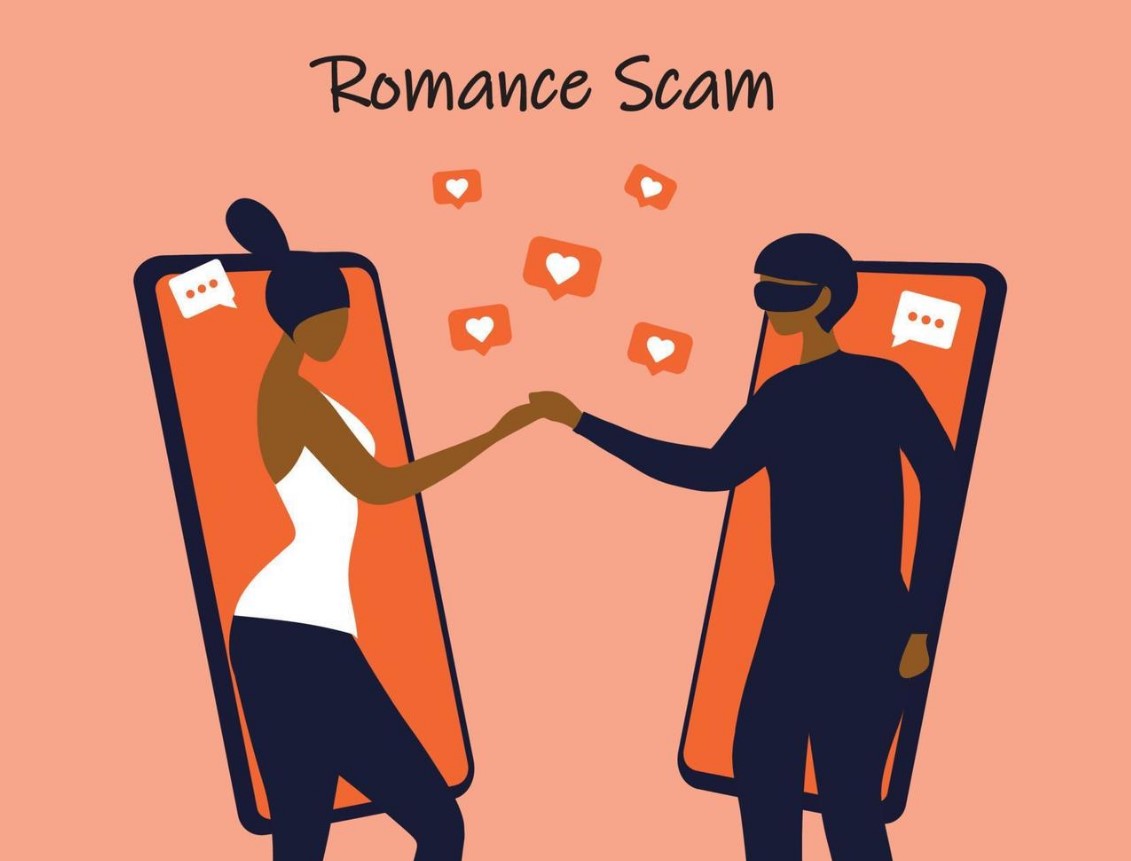
Most advice about romance scams assumes you are on a dating app. Most victims are not. According to the FTC, nearly 60 percent of people who reported losing money to a romance scam in 2025 said it started on social media: a comment on a photo, a friend request from someone with a mutual connection, a message about your dog.
If you are not looking for a relationship, you may think none of this applies to you. It does. People 60 and older lost more to romance scams in 2025 than any other age group, and the losses grew by half in a single year. This guide walks through the six moves scammers make before money is ever mentioned, so you can spot the pattern early.
Already sent money to someone you met online? Stop contact, call your bank on the number on your card, and file a report at ic3.gov. Speed matters. See what to do now.
Key takeaways
- Nearly 60 percent of romance scam losses reported to the FTC in 2025 began on social media, not a dating app.
- People 60 and older lost $584 million to romance scams in 2025, up from $389 million in 2024, according to the FBI.
- Refusing a live video call is the single most reliable warning sign.
- Most of the money is lost through a fake investment, often crypto, not a one-time emergency request.
- Two free checks, a reverse image search and a phrase search, catch many scammers in minutes.

Romance scams by the numbers
These figures come from the FBI Internet Crime Complaint Center's 2025 Annual Report and the FTC's April 2026 data release on social media scams. They only count people who reported a loss, so the real totals are higher.
The six moves that come before money
Romance scammers follow a script. The details change, but the order almost never does. If you can see where a conversation sits on this path, you can step off before it costs you anything.
- Move 1. They pull you off the platformWithin a few messages they suggest WhatsApp, Telegram or text. The app is "buggy," or they "barely check it." The real reason is that platforms have safety teams that remove reported accounts. Off the platform, there is no one watching. Try saying you are happy to keep talking where you met. A real person will shrug. A scammer will keep pushing.
- Move 2. They will not do a live video callThere is always a reason: a bad connection on the rig, a broken camera on the base, poor signal at the hospital. Photos and short clips are easy to fake now, so they prove nothing. A live call where you ask them to do something specific still proves a lot. The FBI says romance scams with a likely AI connection, using generated images and scripted chats, cost victims more than $19 million in 2025.
- Move 3. Their job explains why you can never meetOil rig engineer, deployed soldier, surgeon with an aid group, contractor abroad, ship's captain. Each job explains the distance, the poor signal, the sudden change of plans and, later, the urgent need for money. Real people have these jobs. The warning sign is the job plus the distance plus the refusal to video call, all at once.
- Move 4. Deep feelings, very fastWithin days you hear about a hard childhood, a lost spouse, a betrayal. Soon there is talk of a future together, of soulmates and destiny. Real closeness builds unevenly. Scripted closeness moves in a straight line, because the operation needs your attachment before it needs your money.
- Move 5. Small details that do not add upThe English does not match the background they claim. A family detail changes. They message at times that do not fit their time zone. You will rarely catch one big lie. You will notice small snags, each easy to explain away on its own.
- Move 6. The turn to investingThis is where most of the money goes. They mention their success with a trading app, often cryptocurrency. They do not ask for money. They offer to help you open a small account. Your balance rises, so you add more. Then a withdrawal suddenly needs a "fee," a "tax" or a "compliance payment." The story continues until the accounts are empty.
The one rule to remember: if someone you have never met in person or on a live video call brings up money or investing in any form, stop. That is the moment the scam begins.
What the messages actually sound like
Below is a typical conversation, rebuilt from patterns reported to us and to consumer agencies. Notice how money only appears at the very end, after weeks of trust.
A typical romance scam conversation
The tell: a move off the platform, an excuse to avoid video, and then an "opportunity" to invest. That combination is the scam.

A real connection vs a romance scammer
| Situation | Real person | Romance scammer |
|---|---|---|
| Where you talk | Happy to stay on the app you met on | Pushes you to WhatsApp, Telegram or text fast |
| Video calls | Agrees, even if a little awkward | Always has a reason why not |
| Feelings | Build slowly and unevenly | Love and future plans within days |
| Their story | Stays consistent over time | Small details shift between chats |
| Meeting in person | Makes plans and keeps them | Plans always fall through at the last minute |
| Money | Never asks you to send or invest | Emergency requests or a "can't lose" investment |
Two checks that take five minutes
- Reverse image search their photos. Save a picture and search it on Google Images or TinEye. Stolen photos often belong to a model, an influencer or a real person in another country. If the same face appears under a different name, you have your answer.
- Search their exact words. Paste a distinctive sentence from their messages into a search engine, inside quote marks. Scripts are reused, and other people post them online as warnings. Finding your own love letter on a warning page is painful, but it is faster than any other check.
Red flags at a glance
- They found you, not the other way around. A comment, a friend request or a "wrong number" text that turns friendly.
- They want to move to a private chat app quickly.
- They never do a live video call.
- Their job keeps them far away and out of easy contact.
- They say "I love you" very quickly.
- They mention money, gifts, fees, customs, medical bills or travel costs.
- They talk about a trading app or crypto investment and offer to help you start.
- They ask you to keep the relationship secret from family or friends.
Why this works on careful people
Romance scams do not work because people are foolish. They work because the scammer builds what feels like a real relationship first, with time, attention and consistency. By the time money comes up, the person asking is someone you care about.
Many of these messages come from organized operations. The United Nations Office on Drugs and Crime has documented large compounds in Southeast Asia where trafficked workers are forced to run these chats from scripts, sometimes several people on one conversation. This is not a fair fight, and shame is what keeps most of these losses hidden.

If you are worried about a parent or friend
Accusing rarely works. It often makes the person defend the relationship harder. Ask questions instead:
- Have you had a live video call with them?
- What does their voice sound like?
- Have they ever mentioned money, gifts or investing?
Then say the thing that matters most: that you will not judge them, and that they can come to you at any time without being told they should have known better. That sentence is often what makes it possible for someone to stop.
If money has already gone
Act quickly. Getting money back is never guaranteed, but some payments can be stopped if you move fast.
- Stop all contact. Do not tell them you know. That can prompt them to move the money faster.
- Call your bank using the number on the back of your card. A wire transfer can sometimes be recalled if you act within the first day or two.
- File a report with the FBI at ic3.gov. Quick reports help the FBI's Recovery Asset Team work with banks.
- Report to the FTC at ReportFraud.ftc.gov, and report the profile to the app or social network.
- Keep everything: messages, profile screenshots, wallet addresses, account numbers and receipts.
- If you are 60 or older, call the free National Elder Fraud Hotline at 1-833-372-8311.
Our guide to the first 48 hours after a scam covers the bank conversation in detail. You can also report the scammer to us or look up a phone number they used.
Watch out for recovery scams. After a romance scam, victims are often contacted by "recovery agents" or "lawyers" who promise to get the money back for a fee. That is usually the same operation returning. Read why past victims are targeted again.
Frequently asked questions
What is the biggest warning sign of a romance scam?
Refusing a live video call. Anyone who talks to you daily for weeks but always has a reason not to show their face live is very likely not who they claim to be.
Do romance scams only happen on dating apps?
No. The FTC says nearly 60 percent of people who reported losing money to a romance scam in 2025 said it started on social media.
Why do romance scammers talk about crypto?
A fake investment keeps the money flowing for months. Instead of one emergency request, victims keep adding money to an account that only looks like it is growing.
How can I check if someone's photos are real?
Do a reverse image search on Google Images or TinEye. If the same photos appear under a different name, the profile is fake.
Can I get my money back after a romance scam?
Sometimes, if you act quickly. Call your bank right away and file at ic3.gov. Money sent by wire may be recalled in the first day or two. Crypto is much harder to recover. Never pay anyone who promises to recover it for a fee.
How do I talk to a parent who may be in a romance scam?
Ask calm questions instead of accusing, such as whether they have had a video call or been asked about money. Tell them you will not judge them and that they can always come to you.
How we researched this article
This guide uses figures from the FBI Internet Crime Complaint Center 2025 Annual Report, the FTC's April 2026 data release on social media scams, FTC consumer guidance on romance scams and reporting by the United Nations Office on Drugs and Crime on scam compounds in Southeast Asia. The sample conversation is an illustration built from common reports, not a real transcript. The Scam Exposed is an independent educational platform. We are not a government agency, law enforcement body, or legal advisors. Consult official channels for legal recourse. Reviewed October 18, 2026 by Nitesh Kumar Gupta, Founder and Editor.
Read next on this topic
 That Overpaid Check From a New Client Is a TrapRead guide →
 Is DarkComet Still a Threat in 2026? What US Users Should KnowRead guide →
 The "Easy Online Job" on Telegram That Ends With You Paying in CryptoRead guide →
 Is That Really Social Security Calling? How to Spot Impersonation Scam CallsRead guide →
 Toll-Free Scam Numbers Reported Most in 2026Read guide →
 Debt Relief Scam Call Numbers to Watch Out ForRead guide →
Share Your Experience
No one has commented yet. If this happened to you as well, say so below. Knowing that other people had the same call makes it far easier for the next person to trust their instincts.
Add Your Comment
Every comment is read by a person before it appears, so it will not show up straight away. Never post your phone number, address, or bank details here.